Adaptive Pattern Classification
Definition
Adaptive Pattern Classification refers to a class of machine learning algorithms that dynamically adjust their parameters and structure to improve classification performance over time. These algorithms can learn from new data, adapt to changes in data distribution, and improve their ability to recognise and classify patterns accurately.
Key Concepts
- Adaptability: The ability to adjust to new data and evolving patterns in real-time.
- Pattern Recognition: Identifying and classifying patterns within input data based on learned features.
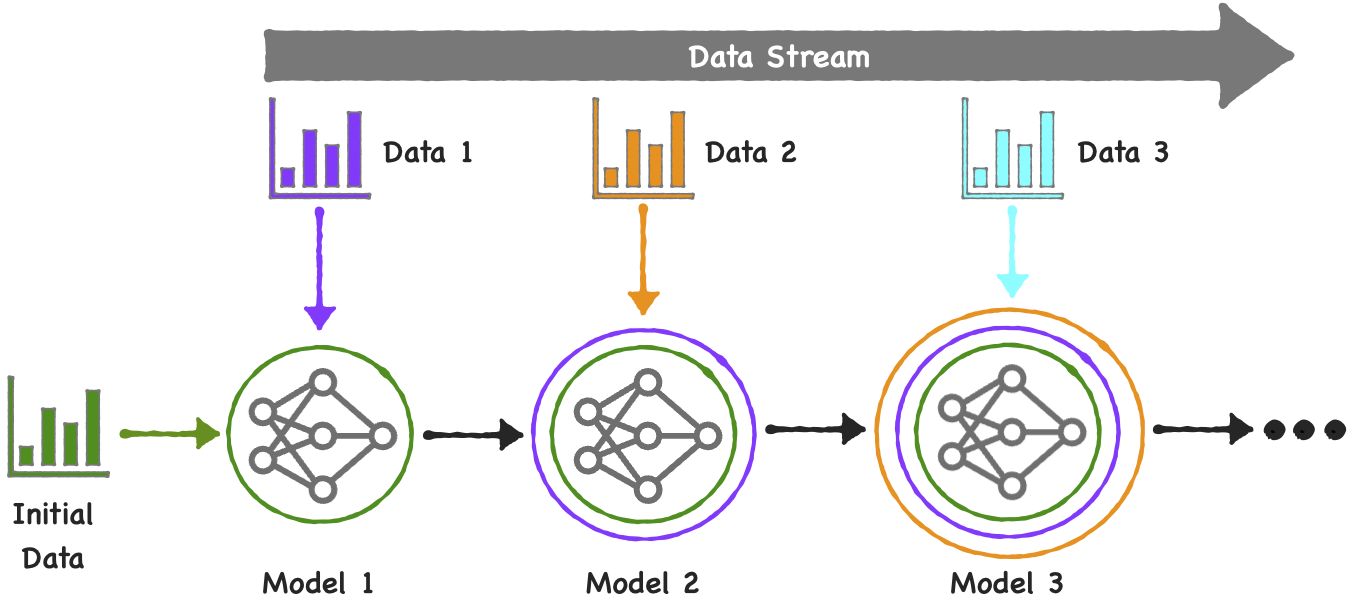
- Incremental Learning: Continuously updating the model with new data without retraining from scratch.
- Real-Time Processing: The capability to process and classify data as it is received.
Detailed Explanation
Adaptability
- Parameter Adjustment: The model parameters are continuously updated to improve performance on new data.
- Model Evolution: The structure of the model can change, adding or removing components to better fit the data.
Pattern Recognition
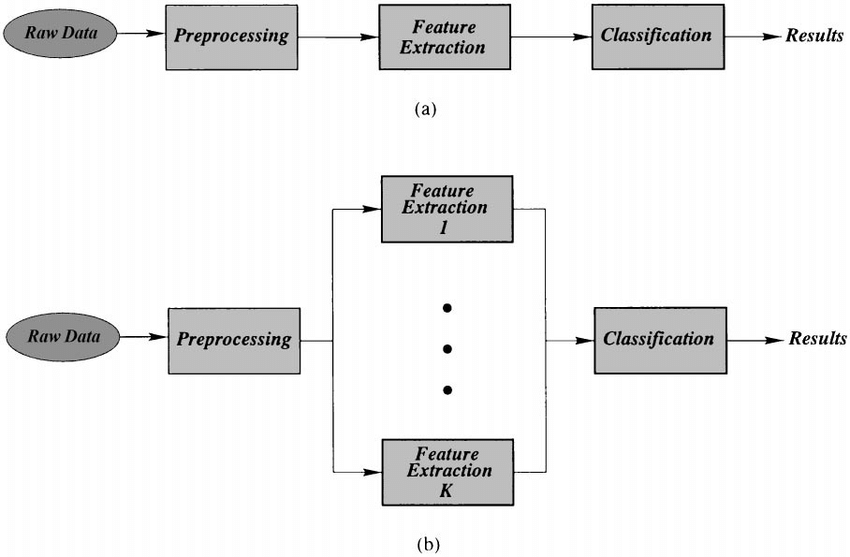
- Feature Extraction: Identifying relevant features from the input data that are useful for classification.
- Classification: Assigning input data to predefined categories based on extracted features and learned patterns.
Incremental Learning
- Continuous Updates: The model is updated incrementally as new data arrives, without requiring a complete retraining.
- Avoiding Catastrophic Forgetting: Ensuring that new learning does not overwrite previously learned patterns.
Real-Time Processing
- Online Learning: Processing data as it is received, making immediate updates to the model.
- Low Latency: The model can quickly adapt to new information, providing timely and accurate classifications.
Diagrams
Structure of an Adaptive Pattern Classification System
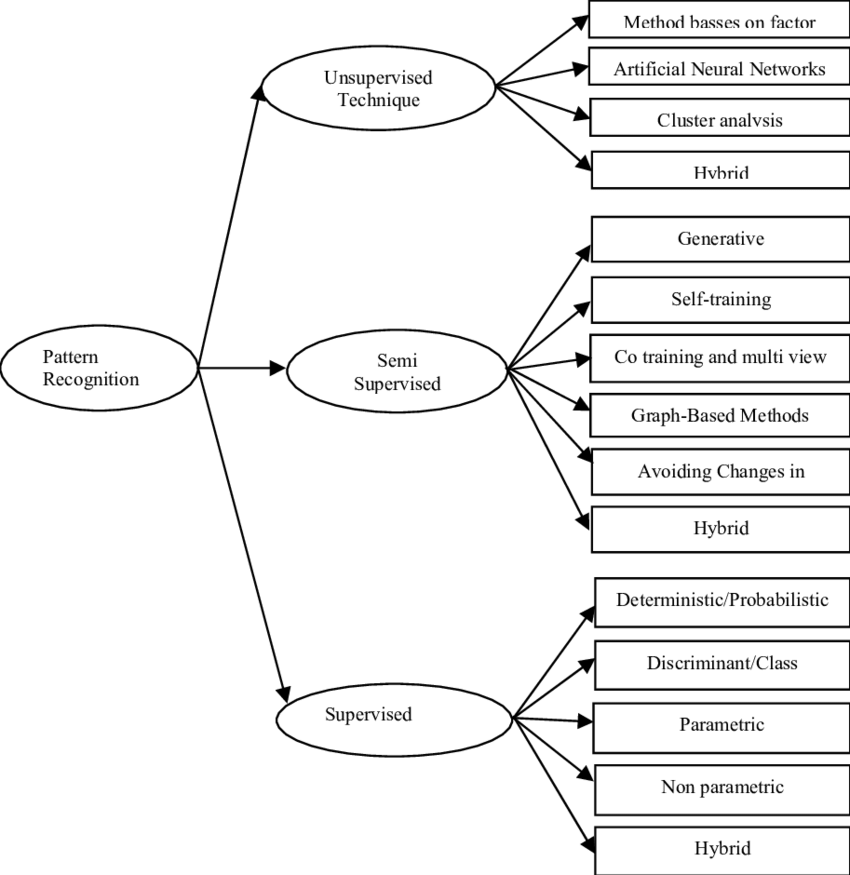
Classification of Pattern-Recognition Techniques
Incremental Learning Process
Links to Resources
- Adaptive Pattern Recognition and Neural Networks: Comprehensive guide on adaptive pattern recognition techniques and neural networks.
- Real-Time Adaptive Pattern Classification: An accessible introduction to real-time adaptive pattern classification with practical examples.
- Machine Learning: A Probabilistic Perspective by Kevin P. Murphy: Textbook providing an in-depth discussion on machine learning models, including adaptive classification techniques.
Notes and Annotations
- Summary of Key Points:
- Adaptive pattern classification involves models that adjust their parameters and structure over time to improve classification performance.
- Key aspects include adaptability, pattern recognition, incremental learning, and real-time processing.
- These models are particularly useful for dynamic environments where data distributions change over time.
- Personal Annotations and Insights:
- Adaptive models are essential for applications requiring continuous learning and adaptation, such as fraud detection, adaptive user interfaces, and real-time data analytics.
- The ability to process data in real-time and make immediate updates ensures that the model remains relevant and accurate as new data becomes available.
Backlinks
- Learning Vector Quantization (LVQ): Refer to notes on LVQ for a specific adaptive classification technique that uses prototype vectors.
- Adaptive Resonance Theory (ART) Networks: Connect to notes on ART networks for another approach to adaptive learning and classification.
- Neural Network Models Overview: Link to an overview of different neural network models to see where adaptive pattern classification fits in the landscape of machine learning techniques.